
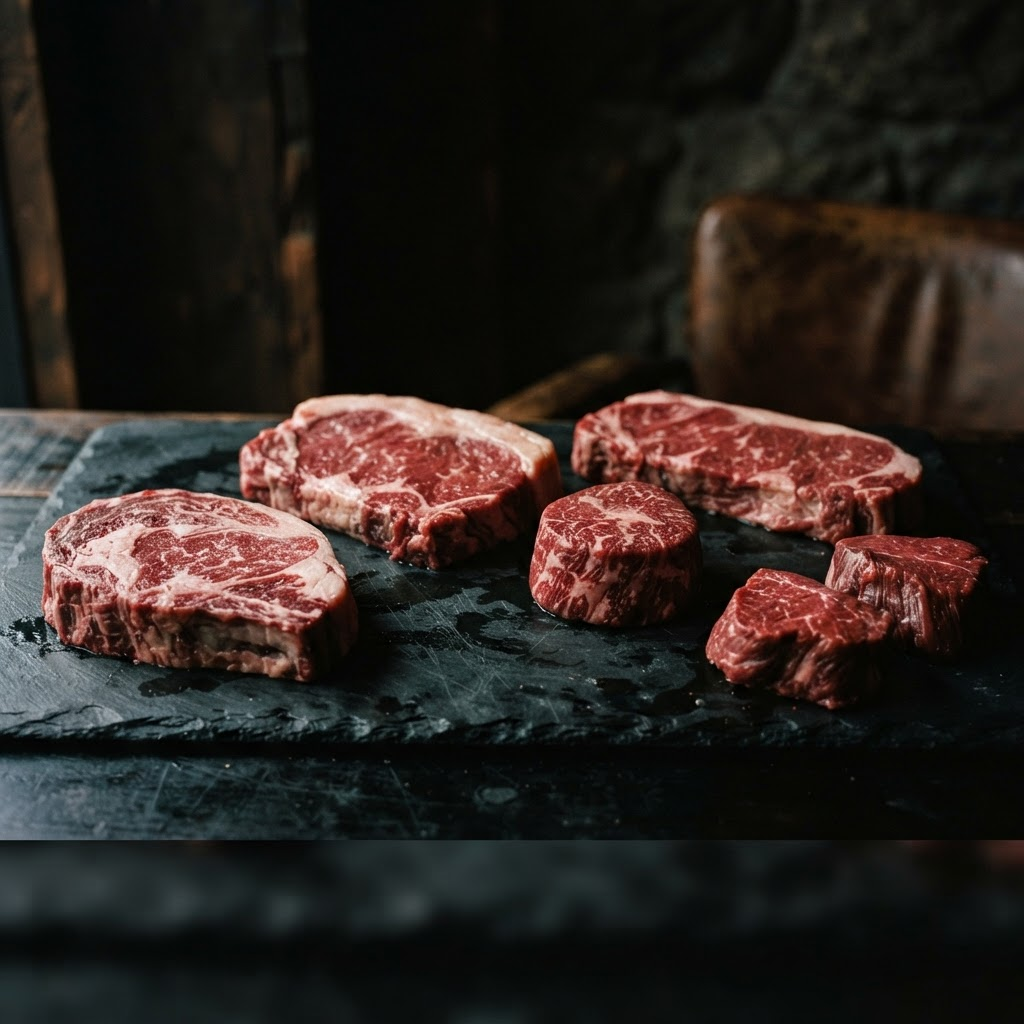
Reserve the cut. We buy the cow when it's full.
KRUDA runs the inverse-purchase model: international importers reserve individual premium cuts online. When a virtual cow reaches 100% reservation, slaughter and production are triggered — no capital tied up in unsold carcasses.
- 5
- Cows reserving now
- 55%
- Avg. occupancy
- 39.97%
- Net yield · Tropa 101000
The Virtual Cow, explained
A reverse supply chain: demand is aggregated before any cattle is bought. The reservable, transactable unit is the individual cut — never the whole animal or the shipment.
- 01
Publish the virtual cow
Each carcass is published cut-by-cut with FOB pricing derived from the P90 Cañuelas cattle cost. The animal is not purchased live yet.
- 02
Importers reserve cuts
Buyers reserve individual cuts — tenderloin, striploin, top round — across one or several cows. Each reservation locks stock instantly.
- 03
100% triggers production
Only when the cow reaches full reservation does KRUDA buy the animal and begin slaughter. Zero speculative inventory.
- 04
Documented shipment
Production and export documentation advance the payment milestones, culminating in the Bill of Lading and final settlement.
Four carcass classifications
The data model handles every export channel — from conventional public cuts to the future Israel contract — without redesign.
Published cows · live occupancy
Reservation status updates in real time. Reserve any open cut before the carcass fills.
Three payment milestones
Channel 1 splits every reservation into three mandatory milestones, protecting both buyer and producer across the production cycle.
- 20%Reservation
Immediate on reserving, paid via card / payment gateway. Locks the cut instantly.
- 30%Production start
Charged when slaughter begins — 50% accumulated at this point.
- 50%Against documents
Balance released only upon Bill of Lading issuance.
Commercial triangulation
The physical destination and the paying entity are fully independent. The engine computes RG AFIP 3577 perception automatically from the paying entity's jurisdiction.
Determines SENASA habilitation and the Bill of Lading — e.g. Russia.
Determines KYC, invoicing and RG 3577 withholding — e.g. Poland.